
The Borrowed Scenery Trick: Making Pool Baths Feel Like the Backyard
A design idea pulled from garden architecture, reworked for cabana bathrooms and pool house retreats.
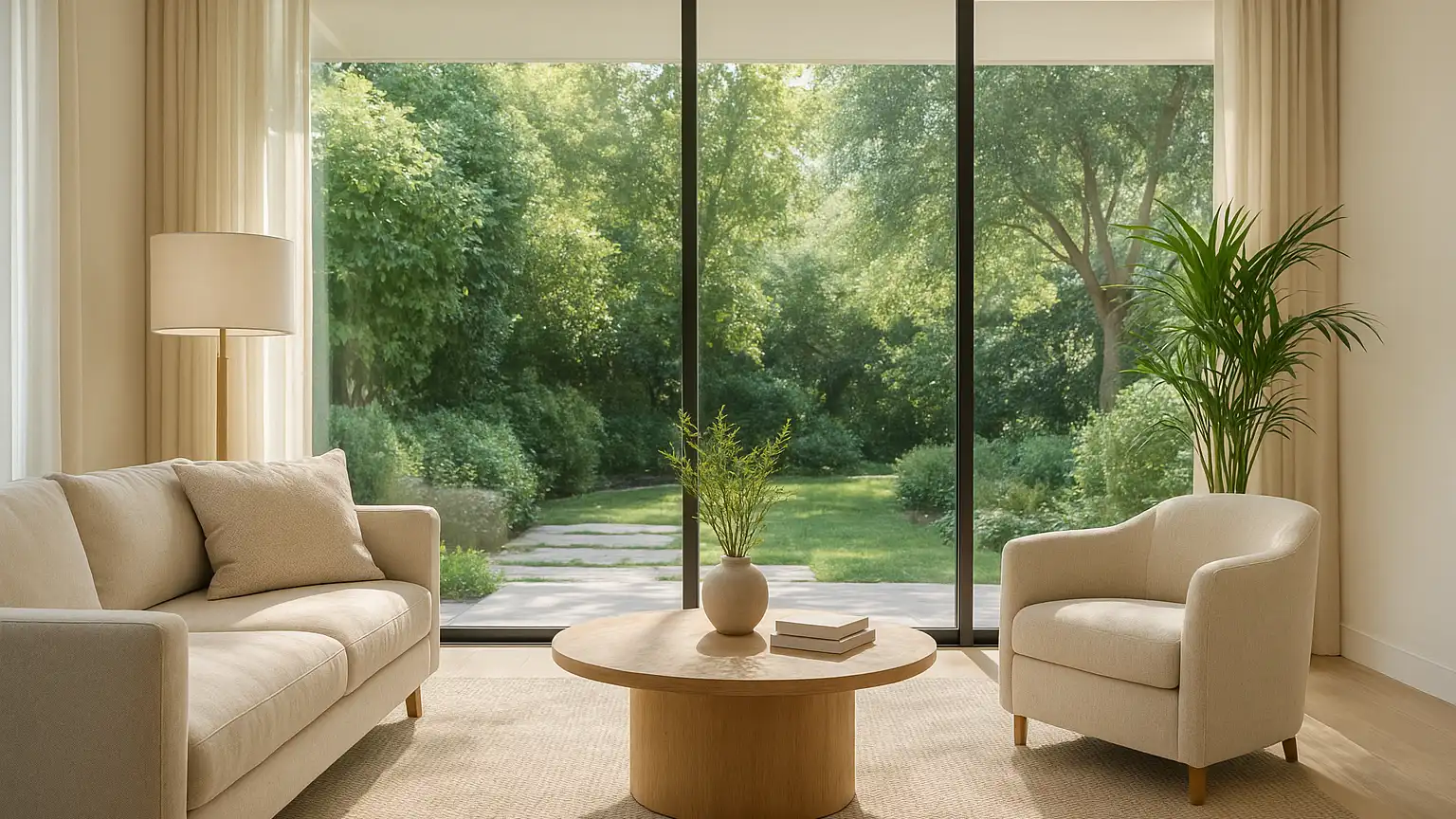
A Different Kind of Bathroom Problem
Most bathroom design advice assumes a house on all sides. Cabinets here, a mirror there, maybe a window over the tub if you're lucky. Pool house and cabana bathrooms break that assumption completely. They sit surrounded by open sky, water reflections, and landscaping that most homeowners spent years perfecting. Treating that bathroom like an indoor room with four solid walls wastes the entire point of having it there.
The homeowners who get this right tend to borrow a concept from garden design called "borrowed scenery," where a structure is positioned and framed so the landscape beyond it becomes part of the room itself. Applied to a spa bathroom, this means the shutters, the sightlines, and even the way light moves through the space are chosen to make the backyard feel like it's leaning in through the wall rather than staying politely outside it.
Plantation shutters happen to be the ideal tool for this, far more than curtains, blinds, or frosted glass ever could be. Their adjustable louvers let a homeowner dial in exactly how much backyard should be visible at any given moment, which is a level of control that softer window treatments simply can't match. The result, when done well, echoes the effect described in cabana baths that feel like backyard air, not walls, but the approach here goes a step further by thinking about the bathroom as a viewing instrument rather than just a private room with a window in it.
What follows is a look at how that borrowed scenery philosophy plays out in real cabana and pool house bathrooms, from where the shutters get placed to what they're made of, and why the small decisions matter far more than most people expect.

Designing Sightlines Like a Resort Spa
Resort spas rarely put a bathtub against a blank wall. Instead, the tub or shower faces the best view on the property, whether that's a koi pond, a stand of palms, or a slice of ocean. Home pool bathrooms can do the exact same thing on a smaller scale, and shutters are what make it work without sacrificing privacy.
The trick is positioning the shutter louvers so they align with a specific feature outside rather than just filling a window opening. A shutter angled to frame the pool's water line, a fire feature, or a mature tree creates a living picture that changes with the light throughout the day. This is a very different mindset than simply covering a window for privacy.
What to Frame On Purpose
- The pool's reflection line, especially at dusk when the water catches the sky
- A specimen tree or palm cluster that anchors the yard's design
- An outdoor fireplace or fire pit visible from the tub
- Distant hills or tree lines that give a sense of depth beyond the fence line
Once the view is chosen, the shutter's louver size and tilt angle can be selected to frame it rather than obscure it. Wider louvers set at a gentle angle tend to pull in more horizontal scenery, which works well for pool decks and low garden beds, while narrower louvers stacked higher favor tree lines and taller landscaping.

Louver Angles That Change With the Sun
A pool bathroom gets used at very different times of day than a regular indoor bathroom. Morning showers before a swim, midday changes between pool sessions, and evening soaks after the sun goes down all call for different amounts of light and privacy. Fixed window coverings can't keep up with that rhythm, but plantation shutters can be adjusted in seconds to match.
In the morning, louvers tilted fully open let low sun spill across tile and stone, which makes a small cabana bath feel considerably larger than its square footage. By midday, a partial tilt cuts glare off the pool surface while still letting the general shape of the yard read through. In the evening, louvers can close down for privacy while string lights or landscape lighting outside still glow softly through the slats, giving the room a warm, layered look instead of going flat and dark.
This kind of light choreography is one of the reasons shutter placement deserves more thought than it usually gets in outdoor bathroom projects. The comparison work done in sun, shade, and style rankings of patio blinds shows just how differently various window treatments handle California's strong midday sun, and plantation shutters consistently come out ahead for rooms that need both privacy and a view.
Homeowners who install shutters on multiple bathroom walls, rather than just one window, get even more control. Being able to open one side toward the pool while closing another toward a neighbor's yard means the room can be tuned throughout the day instead of locked into a single setting.
Material Choices for Steam, Splash and Sun
None of this borrowed scenery approach matters if the shutters themselves can't handle the environment they're placed in. Cabana and pool house bathrooms deal with a brutal combination of steam, direct sun exposure, splashed water, and often high humidity that lingers longer than in a typical indoor bathroom because doors and windows tend to stay open to the yard.
Wood shutters, however attractive, are a poor match for this setting. They swell, warp, and eventually crack under repeated moisture exposure, and refinishing a warped louver is rarely a clean fix. This has pushed most experienced designers toward solid polymer or composite shutters for anything within splash distance of a pool or spa tub.
"The bathrooms attached to pools take more punishment than any other room in a house, between the chlorine in the air, the constant humidity, and the sun bleaching everything that faces a window all day," says Marisol Fenwick, lead design specialist at Direct Buy Blinds. "A waterproof polymer shutter holds its shape and color in that environment in a way wood simply can't."
Beyond the base material, a few other details separate a shutter that lasts from one that needs replacing within a couple of years:
- UV-stable finishes that resist yellowing from direct sun exposure
- Fully sealed louvers rather than painted wood composites that can still absorb moisture at the edges
- Stainless or coated hardware that won't corrode from pool chemicals in the air
- Wide louver profiles that hold their shape without warping over time
Getting the material right is what allows the more creative sightline and light decisions to actually hold up season after season, rather than looking great for a single summer before the moisture damage starts showing.
Where the Backyard Ends and the Bathroom Begins Stops Mattering
A well-designed cabana bathroom stops feeling like a separate structure and starts feeling like an extension of the pool deck itself, which is exactly the goal behind treating shutters as a design tool rather than an afterthought. From framing a specific view like a resort would, to adjusting louver angles throughout the day, to choosing a shutter material built to survive steam and chlorine and sun without complaint (a challenge explored in Arizona Monsoon Humidity Swings and Shutter Slat Material), every decision in this space works toward the same result: a room that borrows its best features from the yard around it instead of competing with them. Communities managing multiple cabana baths across a property often run into the same material question at scale, which is why some HOAs turn to a resource like One Shutter Standard, Every Unit when deciding how to keep every unit consistent without overspending.
The pool houses and cabana baths that get remembered are rarely the ones with the fanciest fixtures. They're the ones where a guest steps in, glances at the shutters framing the water and the trees beyond, and genuinely can't tell where the backyard stopped and the bathroom started. That blurred line is not an accident of good luck. It's the product of thoughtful shutter placement, the right materials, and a willingness to design the room around the view rather than around four walls.