
The Ground Rules of Pest Control Every Homeowner Should Know Before It's Too Late
Most homeowners react too late. This plain-language breakdown of what pest control is, why it matters outdoors, and what a proactive plan actually looks like will change that.

Nobody buys a home and thinks the first priority is pest control. Most people think about paint colors, furniture, maybe a garden. Pest management enters the picture later, usually after something has already gone wrong, and by that point, the conversation has shifted from prevention to repair. That gap between ignoring the subject and reacting to a problem is exactly where pests do their best work.
This is the opening article in the California Outdoor Concepts Pest Control 101 series, a practical, no-nonsense resource built for homeowners who want to understand outdoor pest management from the ground up rather than piece it together after a crisis. The series was created because too many homeowners are making decisions with incomplete information, and the cost of that, financial, structural, and otherwise, is significant. According to the National Pest Management Association, the U.S. structural pest control industry generated over $12.6 billion in service revenue in 2024, a number that reflects just how widespread and serious pest problems have become for households across the country. This series exists to close the knowledge gap before homeowners become part of that statistic.
Defining Pest Control Without the Jargon
Pest control is not just about calling someone when you spot something crawling. At its most fundamental level, pest control refers to the management of organisms, whether insects, rodents, arachnids, or other animals, that cause harm to human health, property, food sources, or the surrounding environment. The word "management" matters. The goal is not always elimination, and in many cases complete elimination of a pest species from an environment is neither realistic nor desirable. The goal is keeping populations below the threshold where they cause meaningful damage or pose genuine risk.
That management happens across several broad categories, each with its own logic and timing:
- Prevention — Removing the conditions that attract or support pests before they arrive. This covers everything from standing water and open food sources to dense vegetation against a foundation and gaps in exterior structures.
- Biological control — Using natural predators, parasites, or pathogens to suppress pest populations. Introducing beneficial insects to a garden is one example. Encouraging birds and other natural predators is another.
- Mechanical and physical control — Traps, barriers, screens, row covers, exclusion netting, and other physical interventions that block or capture pests without chemistry.
- Chemical control — Pesticides, whether synthetic or organic, applied as a targeted intervention when other methods are insufficient.
These methods are not mutually exclusive. The most effective pest management programs use all of them in combination, escalating when necessary and retreating to lower-impact approaches when the situation allows.
The Outdoor Space Problem That Most People Underestimate
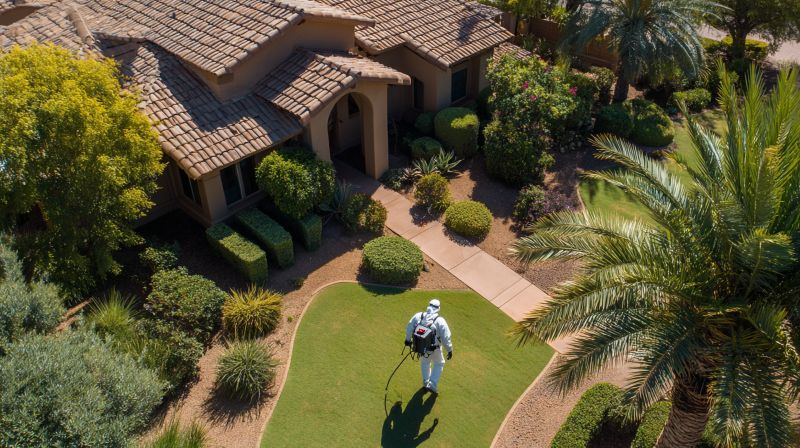
A living room has four walls and a ceiling. A backyard does not. Outdoor living spaces, patios, pergolas, decks, garden beds, lawns, vegetable plots, any open environment around a home, are by design open systems. Every element that makes them appealing, the plants, the moisture from irrigation, the organic material in soil and mulch, the food smells from a grill, also makes them appealing to pests. Removing all of that is obviously not the answer. But ignoring that the dynamic exists leads to problems that compound over time.
The threat is not abstract. Termites cause structural damage to hundreds of thousands of homes annually. Rodents chew through wiring and insulation, creating fire hazards inside walls that homeowners often do not discover until something fails. Mosquitoes and ticks are vectors for serious illnesses including West Nile virus, Lyme disease, and others that have become more geographically widespread in recent years. Stinging insects send more than 500,000 Americans to emergency rooms each year. Beyond health and structural risk, unmanaged pest pressure in outdoor spaces simply degrades the use and value of the property. A backyard overrun with ants, mosquitoes, or burrowing rodents is not a backyard anyone wants to spend time in.
Why Proactive Management Works Better Than Reactive Treatment
There is a real and measurable difference between managing pest pressure as an ongoing discipline and waiting until an infestation develops. The reactive model is more expensive, more disruptive, and less effective. It's also the default for most homeowners, not because they don't care, but because pest control is one of those subjects that feels abstract until it becomes urgent.
The proactive model works differently. It starts with understanding what pests are most likely to be present on a given property based on its geography, landscape, and structural characteristics. It continues with regular monitoring, looking for early signs of activity rather than waiting for visible populations. It then uses the least-impactful interventions appropriate to the situation, reserving more intensive treatments for when they are genuinely needed.
Benjamin McAvoy, founder of Insectek Pest Solutions, a Phoenix-based pest management company that has earned recognition across multiple industry platforms for its integrated management approach, puts it simply: "The homeowners who do best are the ones who think about their property year-round, not just when something bites them or something dies. Prevention work done in the right season is worth more than three emergency calls after the fact."
The Three Things Pests Are Always Looking For
Understanding what drives pest activity makes prevention a much more logical exercise. Pests are not random. Every species that establishes itself on a property does so because the conditions support it. The three universal attractants, regardless of pest species, are food, water, and shelter.
Food takes many forms. For insects like ants and cockroaches, food means organic debris, open garbage, compost, and unsecured pet food. For aphids and other sap-feeders, food means the plants in your garden. For rodents, food means seeds, nuts, fruit, and anything organic that is accessible.
Water is perhaps the most controllable attractant. Standing water supports mosquito breeding. Moisture in soil, mulch, and beneath structures creates habitat for termites, cockroaches, earwigs, and many other species. Leaky irrigation systems, clogged gutters, and poor drainage are often the root cause of pest problems that appear to be something else.
Shelter is the structural element. Dense vegetation against a foundation provides cover for ants and rodents. Wood piles stored against a house invite termites. Cluttered sheds and storage areas become nesting sites for spiders, rats, and numerous other animals that are genuinely looking for a stable, protected place to live.
Addressing these three elements is the backbone of any prevention strategy, and it requires no chemicals at all.
What Integrated Pest Management Actually Means in Practice
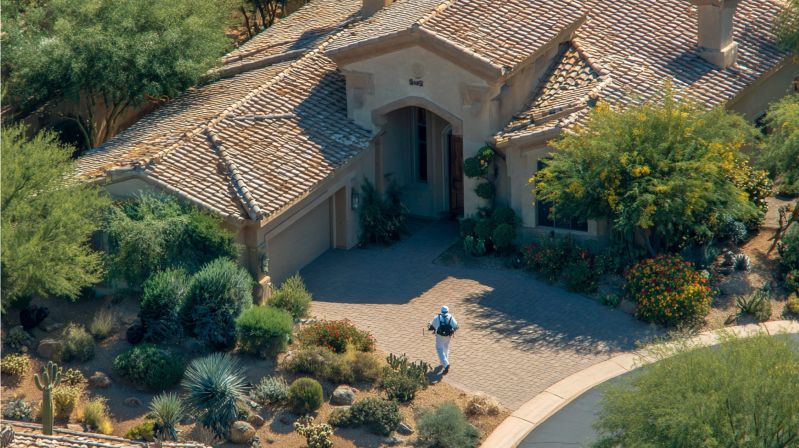
Integrated Pest Management, widely known as IPM, is the framework that most reputable pest management programs are built around. It was developed over decades of agricultural and environmental research and has become the standard approach recommended by public health organizations and regulatory bodies worldwide, including the EPA. The word "integrated" refers to combining multiple methods rather than relying on a single tool, and the word "management" again signals that the goal is practical control rather than theoretical eradication.
In a residential context, IPM looks like this in practice: identifying the specific pest species present, understanding its biology and what it needs to survive, setting a threshold for what level of activity is tolerable, applying the lowest-impact interventions first, and escalating only when those are insufficient. It is, at its core, a rational and evidence-based approach to a problem that homeowners often tackle emotionally, reaching for the nearest spray can without thinking about whether it's the right tool or whether it will create secondary problems.
One aspect of IPM that homeowners often overlook is the distinction between different pest categories and the safety considerations that accompany specific threats. For example, resources like this scorpion control guide from Precision Pest Control make clear that certain pest categories, particularly venomous arachnids, require licensed technicians and specialized methods because eco-friendly approaches must also account for the safety of children, pets, and household members near treatment areas. The same principle applies broadly: the more dangerous the pest, the more important it is that identification and treatment are handled with qualified knowledge rather than guesswork.
The Costs of Getting It Wrong
A homeowner who misidentifies a pest and applies the wrong treatment does not solve the problem. They often delay it, sometimes allowing it to become more entrenched before the correct approach is used. A homeowner who relies on surface-level sprays for pest populations that are primarily subterranean, like certain ant species or termites, may see a temporary reduction in visible activity while the underlying colony expands undisturbed.
The financial consequences accumulate quickly. Fifty percent of surveyed homeowners in a National Pest Management Association study reported structural damage caused by a pest problem. Most standard homeowner insurance policies exclude pest-related damage, meaning every dollar of repair comes out of pocket. Beyond structural costs, there are medical costs from pest-related illness, food loss from pantry pests and garden destruction, and the harder-to-quantify cost of not being able to use your outdoor living space the way you intended.
Sandra Collins, a licensed pest management professional with more than 20 years of field experience in residential pest control, has observed the pattern repeatedly: "The homes that end up with serious pest damage are almost never the ones where something unusual happened. They're the ones where the early signs were there for months and no one knew what they were looking at."
Building a Pest Management Mindset From the Start
The best time to start thinking about pest control is before anything is wrong. That means walking the property with a critical eye, identifying where pest pressure is most likely to develop, sealing gaps, fixing drainage issues, adjusting landscaping where it's too close to the structure, and setting up a monitoring routine that makes problems visible early rather than late.
It also means understanding that pest control is not a single event. It is a discipline that runs throughout the year, shifting in focus with the seasons, responding to what the property is showing, and building on what has worked. Homeowners who treat it as an ongoing part of property maintenance rather than an emergency service get substantially better results, spend less money overall, and enjoy their outdoor spaces more fully.
The Investment That Keeps Paying You Back
Pest control, approached correctly, is not just damage prevention. It is a form of property stewardship that maintains value, protects health, and keeps outdoor spaces usable. Every dollar spent on understanding the environment, identifying risks early, and applying targeted responses when needed returns more than a dollar in avoided cost down the road.
The rest of the California Outdoor Concepts Pest Control 101 series builds on everything covered here. Pest identification, prevention strategies tailored to outdoor living spaces, organic and chemical treatment options, seasonal timing, and long-term planning are all ahead. Starting with a clear understanding of what pest control actually is, and why it works the way it does, makes every subsequent article more actionable and every decision more informed.